



A budgeting guide is a practical financial system for saving money, travelling affordably, upgrading your home, and using credit cards responsibly. Budgeting often gets a bad reputation. For many people, the word immediately brings up images of restriction, sacrifice, or constantly saying “no” to things they enjoy. But the truth is very different.
Budgeting isn’t about cutting your life down to the bare minimum. It’s about designing a financial system that lets you live better, spend confidently, save consistently, and plan ahead without stress. When done correctly, budgeting becomes the foundation of a smart financial lifestyle that supports everything you care about — from travel to home improvements to responsible credit use.
If you’ve ever wondered why your money seems to disappear at the end of every month or why big goals like vacations or home upgrades feel out of reach, the problem usually isn’t income. It’s the lack of a clear plan. This guide will walk you through building one realistic budgeting system that works with real life. By the end, you’ll know exactly how to organize your money so you can save more, travel affordably, upgrade your home gradually, and use credit cards without falling into debt.
What Budgeting Really Means (and Why Most People Get It Wrong)
Many people misunderstand what a budget actually is. They think it means living paycheck to paycheck on purpose, tracking every tiny expense, or cutting out everything fun. Some assume budgeting is only for people who are struggling financially. Others try it once, feel overwhelmed, and quit.
In reality, effective budgeting has nothing to do with restriction. It’s about clarity. A good budget simply means planning your spending in advance instead of reacting after the money is gone. It means aligning your money with your priorities and creating room for both responsibilities and enjoyment. When you know where every dollar is going, you feel calmer and more in control.
A well-built budget doesn’t limit your lifestyle. It supports it. Instead of wondering if you can afford something, you already know. Instead of guilt after spending, you feel confident because it was planned.
The Goal of a Lifestyle Budget
Most budgeting advice focuses only on bills and debt. That’s too narrow. Life is bigger than just surviving month to month. You want to travel, enjoy your home, buy things you love, and still build savings for the future.
That’s where a lifestyle budget comes in. A lifestyle budget is a system that connects all areas of your life into one simple plan. It helps you control daily expenses, save money automatically, plan affordable travel, improve your home gradually, and use credit cards wisely without stress. Instead of juggling separate budgets for everything, you create one central structure that supports every decision.
This is the difference between short-term budgeting and long-term financial stability. One focuses on getting through the month. The other focuses on building a life you actually enjoy.
Step 1: Create a Simple Monthly Budget Framework
Every strong budget starts with structure. Without structure, money flows randomly. With structure, money flows intentionally.
A practical monthly budget usually has four main sections.
First are fixed expenses. These are the bills that stay relatively consistent each month. Rent or mortgage payments, utilities, insurance, transportation costs, internet, and subscriptions all fall into this category. These are your non-negotiables. Knowing this number gives you a clear baseline for how much income you must cover before anything else.
Next come variable living expenses. These are flexible costs that change month to month, like groceries, dining out, personal care, clothing, and entertainment. This category is where many people overspend because it feels small in the moment. A coffee here, a takeout meal there, and suddenly the total is hundreds of dollars higher than expected. Setting reasonable limits here gives you freedom without chaos.
Then you have savings and financial goals. This is where many budgets fail because people treat savings as optional. Savings should be planned just like rent or electricity. Your budget should include emergency funds, short-term savings, and long-term goals. Paying yourself first is one of the simplest habits that separates financially secure people from those constantly stressed.
Finally, add lifestyle categories. This is where budgeting becomes empowering. Instead of pretending fun doesn’t exist, you plan for it. Travel funds, home decor, hobbies, personal development, and even gifts should have their own space. When lifestyle spending is planned, guilt disappears because you know you’ve already accounted for it.
If you want a detailed template for building your own spending plan, resources like the Consumer Financial Protection Bureau offer free worksheets at their website.
Step 2: Saving Money Without Feeling Deprived
Saving money often feels like punishment because many people approach it with an all-or-nothing mindset. They try to cut everything at once, feel miserable, and eventually give up. Smart saving isn’t extreme. It’s intentional.
One of the easiest strategies is automation. Set up automatic transfers to savings the day you get paid. When you never “see” the money in checking, you’re less tempted to spend it. It becomes effortless.
Another powerful method is using sinking funds. A sinking fund is simply a small monthly amount saved for a specific purpose. Instead of panicking when a large expense appears, you prepare in advance. You might have separate funds for travel, holidays, car repairs, or annual bills. These small contributions build quietly and remove financial stress later.
Saving based on goals rather than fear also helps. It feels better to save for something exciting than to save because you’re worried. Maybe you’re saving for a beach trip, a bedroom makeover, or a new laptop. When savings have purpose, you stay motivated. Hence with your budgeting guide you can organise your budget better.
Tools like You Need a Budget can help automate and organize these categories clearly.
Step 3: Budgeting for Travel Without Going Into Debt
Travel is one of life’s greatest joys, but it’s also one of the most common ways people destroy their budgets. Many vacations end up on credit cards, and months later, you’re still paying for a trip that’s already over. That’s not relaxing — it’s stressful.
The smarter approach is prepaying yourself through a travel fund. Instead of charging flights and hotels impulsively, you save monthly. Even small amounts add up. Fifty or one hundred dollars a month becomes a full vacation fund within a year.
Planning destinations strategically also helps. Traveling during off-peak seasons, using fare comparison sites, and booking in advance can dramatically reduce costs. Websites like Google Flights and Skyscanner help you compare prices easily.
When travel is funded in advance, you enjoy it fully. There’s no guilt, no debt, and no regret.
Step 4: Budget-Friendly Home Decor and Living Expenses
Your home should feel comfortable and inspiring, but many people overspend trying to upgrade everything at once. A budget-friendly approach focuses on gradual improvements rather than instant perfection.
Instead of redecorating an entire room in one weekend, create a monthly home improvement fund. Replace items one at a time. Focus on changes that make the biggest impact first, like lighting, organization, or fresh paint. Small upgrades often create bigger results than expensive purchases. This is where the budgeting guide plays a vital role.
Planning purchases also reduces impulse spending. When you wait and budget for items, you’re more likely to buy what you truly need rather than what looks appealing in the moment.
A home that improves steadily over time feels satisfying without creating financial strain.
Step 5: Credit Card Budgeting and Smart Borrowing
Credit cards are tools. They’re not good or bad on their own. The problem arises when they’re used without a plan.
Responsible credit card use means charging only what you’ve already budgeted for and paying balances in full every month. This way, you enjoy rewards or cashback without paying interest. When you treat your card like cash — not extra money — it works in your favor.
Avoid emotional spending or impulse purchases. Before swiping, ask yourself whether the expense fits your plan. If it doesn’t, wait.
For helpful guidance on credit management, the Federal Trade Commission provides consumer tips.
Credit cards should support your budget, not control it.
How Budgeting Connects Everything
This is the most important concept in personal finance. Budgeting is the system that connects savings, travel, home upgrades, and credit use into one organized flow. Without a good budgeting guide, is like one without central plan, everything feels random. Savings get skipped. Travel creates debt. Credit cards feel overwhelming. Home expenses spiral out of control.
With one system, every dollar has a purpose. Spending becomes intentional. Financial confidence grows. Decisions feel easier because you already know what you can afford.
Turning Budgeting Into a Repeatable Habit
A successful budget isn’t something you set once and forget. Life changes constantly, and your budget should adapt. Review it monthly. Adjust categories as expenses shift. Increase savings as income grows. Over time, this becomes second nature.
When budgeting becomes a habit rather than a chore, money management feels automatic.
Budgeting for Long-Term Financial Goal
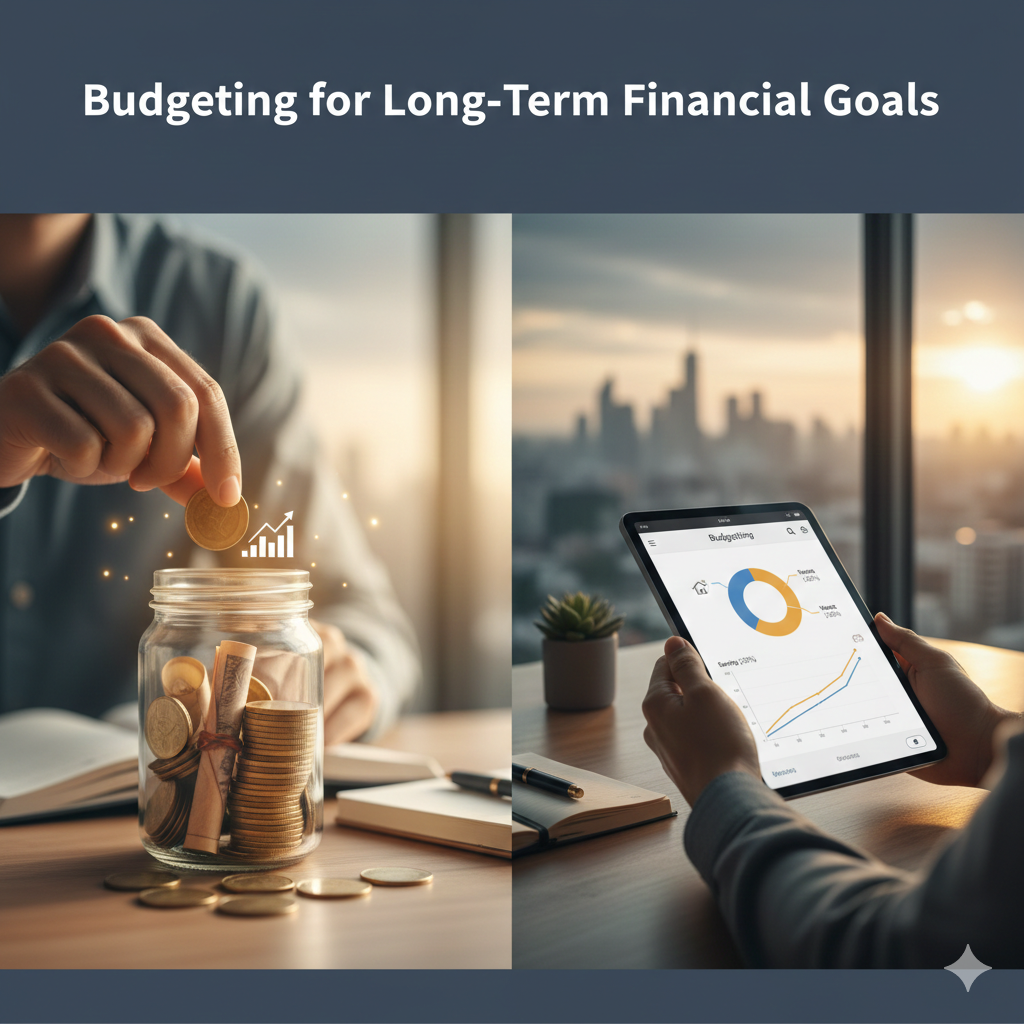
At its core, budgeting guide isn’t about perfection. It’s about progress. It’s about waking up without money anxiety, knowing your bills are covered, your savings are growing, and your goals are within reach.
When budgeting becomes part of your lifestyle, decisions become easier. You stop wondering if you can afford things because you already know. You feel calm instead of stressed. You build a future intentionally rather than hoping everything works out.
Frequently Asked Questions
How much should I save each month? A common guideline is at least 20% of your income, but any consistent amount is better than nothing. Start small and increase gradually.
Should I use cash or cards? Either works, as long as spending is planned. If credit cards tempt you to overspend, use cash or debit.
How big should an emergency fund be? Aim for three to six months of essential expenses.
How often should I review my budget? Monthly reviews work best to stay on track.
Do I need budgeting apps? Not necessarily, but tools like Mint or YNAB can simplify tracking.
Final Thoughts: Budgeting Is the Backbone of Financial Freedom
The budgeting guide is whether your goal is saving more money, traveling affordably, improving your home, using credit cards wisely, or building long-term stability, everything starts with one solid budgeting system. Budgeting isn’t about saying no to life. It’s about saying yes to the right things with confidence.
When your money has a plan, your life feels lighter. And that’s what a smart financial lifestyle is really about.
Read Through Other Related Articles