
Air Conditioner Replacement Cost : What Homeowners Should Know Before Replacing an AC
As homeowner you can Learn about air conditioner replacement costs, equipment, installation, efficiency, contractor estimates, repair vs replacement and ways to reduce the cost of a new AC system
By temitope oshadogan · 1 Sept 2026 · 4 min read
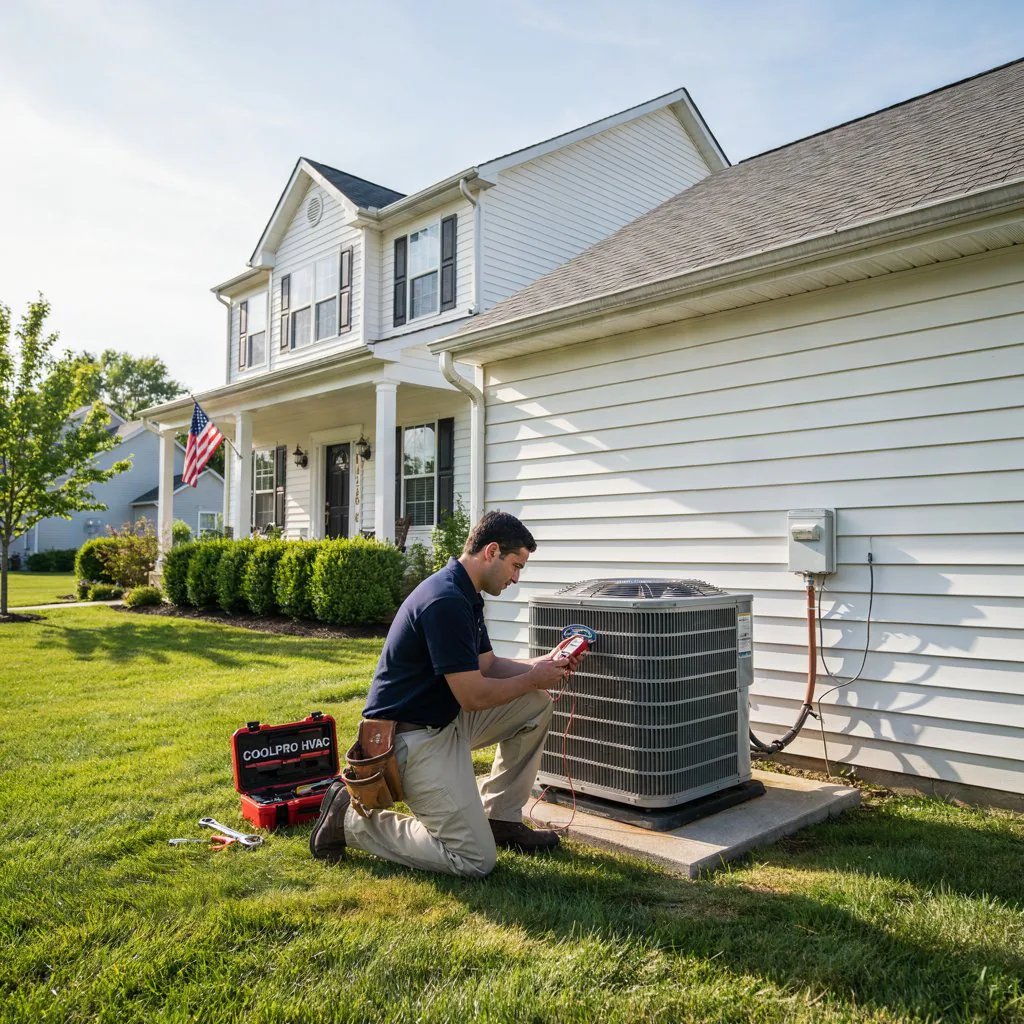
As homeowner you can Learn about air conditioner replacement costs, equipment, installation, efficiency, contractor estimates, repair vs replacement and ways to reduce the cost of a new AC system. Replacing an air conditioner can be one of the larger home-maintenance expenses a homeowner faces.
The total cost depends on much more than the price of the outdoor unit.
A complete replacement may involve:
Equipment Indoor components Outdoor components Labor Installation materials Refrigerant-related work Electrical work Duct modifications Permits Removal and disposal Thermostat Accessories
Your location, house size, system type, efficiency requirements and installation complexity can also influence the final price.
Because of these variables, homeowners should be cautious about relying on a single generic internet price.
The most useful number is the installed price for your specific home.
AC Replacement Cost: What You Are Actually Paying For
New AC System
Equipment Labor Installation materials Electrical work Ductwork Thermostat Permits Removal
= Total Installed Cost
This helps homeowners understand why equipment prices advertised online may differ substantially from contractor estimates.
Why AC Replacement Costs Differ Home Size
Larger homes may require different equipment capacity.
However, bigger is not automatically better.
An HVAC professional should properly assess the home before recommending equipment size.
Climate
Homes in very hot climates may have different cooling requirements from homes in milder climates.
Equipment Efficiency
Higher-efficiency equipment can cost more initially.
The homeowner should compare the additional upfront expense with potential operating savings.
Installation Complexity
Replacing a system with a straightforward installation may cost differently from modifying ductwork, electrical systems or equipment locations.
Should You Repair or Replace Your AC?
This is the first question to answer.
Replacement may be worth considering when:
The system is aging Repairs are becoming frequent Major components have failed Energy performance is poor Parts are difficult to obtain The system no longer adequately cools the home
Repair may make more sense when:
The system is relatively young The failure is minor The system has been reliable Repair cost is reasonable Efficiency remains acceptable How Old Is Your AC System?
Age is an important consideration.
An older system may have more components approaching the end of their useful service life.
However, age alone doesn't determine whether replacement is necessary.
Consider age together with:
Condition Reliability Efficiency Repair history Maintenance Future repair risk What Does a New AC Installation Include?
Ask the contractor whether the proposal includes:
New outdoor condenser Indoor coil or air handler Refrigerant-related work Thermostat Installation labor Startup/testing Electrical connection Drainage Duct modifications Removal of old equipment Disposal Permits
Never assume everything is included.
Get a Detailed Written Estimate
A professional replacement estimate should clearly identify the proposed equipment and major work.
Ask for:
Manufacturer
Model
Efficiency rating
Capacity
Labor
Installation
Warranty
Permits
Additional charges
This allows you to compare proposals properly.
Compare More Than Three Numbers
Imagine:
Quote A
Lower equipment price.
Quote B
Moderate equipment price and comprehensive installation.
Quote C
Higher equipment price but extended labor warranty.
The lowest quote isn't automatically the best.
Compare the complete package.
Understand Efficiency Ratings
Modern HVAC equipment may have different efficiency ratings.
The appropriate rating depends on your climate, usage and budget.
Ask the contractor:
"How much additional upfront cost am I paying for the higher-efficiency system?"
Then ask:
"What potential operating savings could that provide under my expected usage?"
Don't assume the highest-efficiency system automatically produces the fastest financial return.
Consider Your Existing Ductwork
If the existing ductwork is leaking, damaged or poorly configured, simply installing new equipment may not solve every comfort problem.
Ask the contractor to evaluate:
Supply ducts Return ducts Leakage Insulation Airflow Registers Return-air capacity Consider the Thermostat
A replacement system may provide an opportunity to upgrade the thermostat.
Smart thermostats can offer features such as:
Scheduling Remote control Temperature monitoring Usage information
But the thermostat should be compatible with the HVAC equipment.
What About Heat Pumps?
Homeowners replacing traditional air-conditioning systems may also encounter heat-pump options.
A heat pump can provide heating and cooling.
Whether it makes financial and practical sense depends on:
Climate Existing heating system Electricity costs Equipment Installation Available incentives Home requirements
Ask for a comparison rather than assuming one option is universally better.
How to Reduce AC Replacement Cost Compare Multiple Contractors
Get multiple detailed proposals.
Research Incentives
Check current utility, state and federal programs before buying.
Schedule Ahead
If your old system is struggling but still operating, research replacement before an emergency.
Compare Efficiency
Calculate potential long-term operating costs.
Avoid Unnecessary Features
Only pay for upgrades that provide value for your home.
Maintain the New System
Follow manufacturer maintenance recommendations.
Don't Wait Until the Hottest Day
Emergency replacement can put homeowners under pressure.
If an aging AC system repeatedly fails, start researching replacement before complete failure.
You can then:
Compare contractors Compare equipment Review financing Research incentives Plan the installation Avoid rushed decisions Questions to Ask Before Buying a New AC
Ask the contractor:
What size system does my home require? How was that size determined? What efficiency rating does it have? What equipment is included? Does the quote include installation? Are permits included? Is removal included? Is disposal included? What warranty is included? What does the labor warranty cover? Will existing ductwork work with the new system? Are electrical modifications necessary? Are rebates available? What maintenance is recommended? What is the total installed price? AC Replacement Cost vs Repair Cost
Don't compare only:
Repair = $X
versus
Replacement = $Y
Instead consider:
Option A
Repair now
Future repairs
Operating costs
Option B
Replacement
Installation
Future operating costs
Maintenance
Repair Today
→ $Repair
→ Estimated future repairs
→ Energy cost
→ Total
versus
Replace
→ Equipment
→ Installation
→ Maintenance
→ Energy cost
→ Total
This is a much more useful comparison than looking at today's invoice alone.
Frequently Asked Questions How much does it cost to replace an air conditioner?
There is no single price that applies to every home. The total depends on equipment, system size, efficiency, labor, installation complexity, location, permits and additional work.
Is replacing an AC cheaper than repairing it?
Not necessarily. Repair may be more economical for a relatively new and reliable system. Replacement may become more attractive when an older system has repeated major repairs or poor efficiency.
How long does an AC replacement take?
Installation time varies depending on the system and complexity of the work. Ask your contractor for an expected installation schedule.
Should I replace my furnace and AC at the same time?
Not automatically. It depends on the age, condition, compatibility and efficiency of both systems. Ask for separate options and a combined-system comparison.
Is a high-efficiency AC worth the extra money?
It can be, depending on climate, electricity costs, usage and the difference in purchase price. Calculate potential long-term savings rather than assuming the most efficient system is automatically the best financial choice.
Should I replace my ductwork when replacing my AC?
Not necessarily. Existing ductwork may be reusable if it is appropriately sized and in good condition. A professional evaluation can identify leakage or airflow problems.
Can I install an AC myself?
Major HVAC installation involves technical, electrical and refrigerant-related work. Homeowners should use appropriately qualified professionals and comply with local requirements.
How do I find AC replacement contractors near me?
Search for local HVAC contractors, compare several qualified companies, verify applicable licensing and insurance, and request detailed written proposals.
When is the best time to replace an AC?
Replacing before complete failure gives homeowners more time to compare options. Seasonal pricing and contractor availability vary by market, so there is no single universally cheapest month.
How to Find an AC Replacement Contractor Near You
Start with several local companies.
Look for:
Experience Reviews Appropriate licensing Insurance Detailed proposals Warranty Clear communication
Ask each contractor to evaluate the existing system and explain why they recommend a particular replacement.
How to Avoid an Oversized AC
An oversized system isn't automatically better.
Proper equipment sizing matters for:
Comfort Humidity control Efficiency Cycling Equipment performance
Ask the contractor how the proposed system size was determined.
Don't Forget Maintenance After Replacement
Your new system is an investment.
Protect it by following manufacturer recommendations.
Keep filters maintained.
Keep outdoor equipment clear.
Address unusual noises or performance problems promptly.
Schedule professional maintenance when appropriate.
Build an AC Replacement Savings Plan
Instead of waiting for failure, homeowners with aging systems can start planning.
Step 1
Determine the age of your system.
Step 2
Review recent repair history.
Step 3
Estimate current energy costs.
Step 4
Research potential replacement options.
Step 5
Check available incentives.
Step 6
Request several estimates.
Step 7
Compare total installed cost.
Step 8
Evaluate long-term operating costs.
Step 9
Choose the system and contractor that best fit your circumstances.
AC Replacement Cost Checklist
Before signing a contract, confirm:
☐ Equipment model
☐ System capacity
☐ Efficiency rating
☐ Equipment warranty
☐ Labor warranty
☐ Installation
☐ Permit
☐ Electrical work
☐ Duct modifications
☐ Thermostat
☐ Removal
☐ Disposal
☐ Startup/testing
☐ Total price
☐ Payment schedule
☐ Financing terms, if applicable
Related Windetop Resources
For more information, explore:
AC Repair Cost Guide
https://windetop.com/blog/ac-repair-cost-what-homeowners-should-expect-to-pay-and-how-to-save-money
How to Save Money on Heating & Air Conditioning Contractors Near You
Ultimate HVAC Savings Guide
https://windetop.com/blog/ac-repair-cost-what-homeowners-should-expect-to-pay-and-how-to-save-money
Home Improvement Savings Guide
https://windetop.com/blog/home-improvement-on-a-budget-ways-to-upgrade-your-space
These resources can help homeowners approach HVAC decisions as part of a broader home-maintenance and budgeting strategy.
Need Help Organizing a Home Service Request?
If you're researching an HVAC, heating, cooling or other home improvement project, you can use the Windetop connection form to organize your service request.
Provide:
Name City Contact information Service required Project details Preferred contact method
https://windetop.com/p/windetop-document-intake-support-service
Windetop provides document intake, administrative support and lead-intake assistance and does not itself perform HVAC installation or repair.
Final Thoughts
Replacing an air conditioner is a significant household decision.
Don't make it based solely on the first price you receive.
Understand the problem.
Compare repair and replacement.
Get multiple estimates.
Compare equipment.
Understand efficiency.
Check warranties.
Investigate available incentives.
Evaluate installation costs.
And think about long-term operating expenses.
The goal isn't necessarily to purchase the cheapest air conditioner.
The goal is to choose an appropriately sized system, a qualified installation professional and a total cost that makes sense for your household.
A little planning before replacement can help you avoid making an expensive decision under emergency pressure.
[INFOGRAPHIC: AC Replacement Journey]
Aging AC
↓
Evaluate
↓
Repair vs Replace
↓
Research Incentives
↓
Compare Contractors
↓
Compare Equipment
↓
Review Total Cost
↓
Install
↓
Maintain
Disclaimer: Air conditioner replacement costs vary by location, equipment, home characteristics, contractor and installation requirements. This article provides general educational information and is not a quote, diagnosis or professional HVAC recommendation.
Enjoyed this?
Get the next one in your inbox, or take the next step on your career.
Book a discovery call