
All insightspersonal finance

Monthly Budget Template: A Simple Guide to Manage Your Money

Managing money doesn’t have to feel overwhelming. A monthly budget template gives you a clear picture of where your money goes, helps you plan ahead

By temitope oshadogan · 30 Aug 2026 · 4 min read
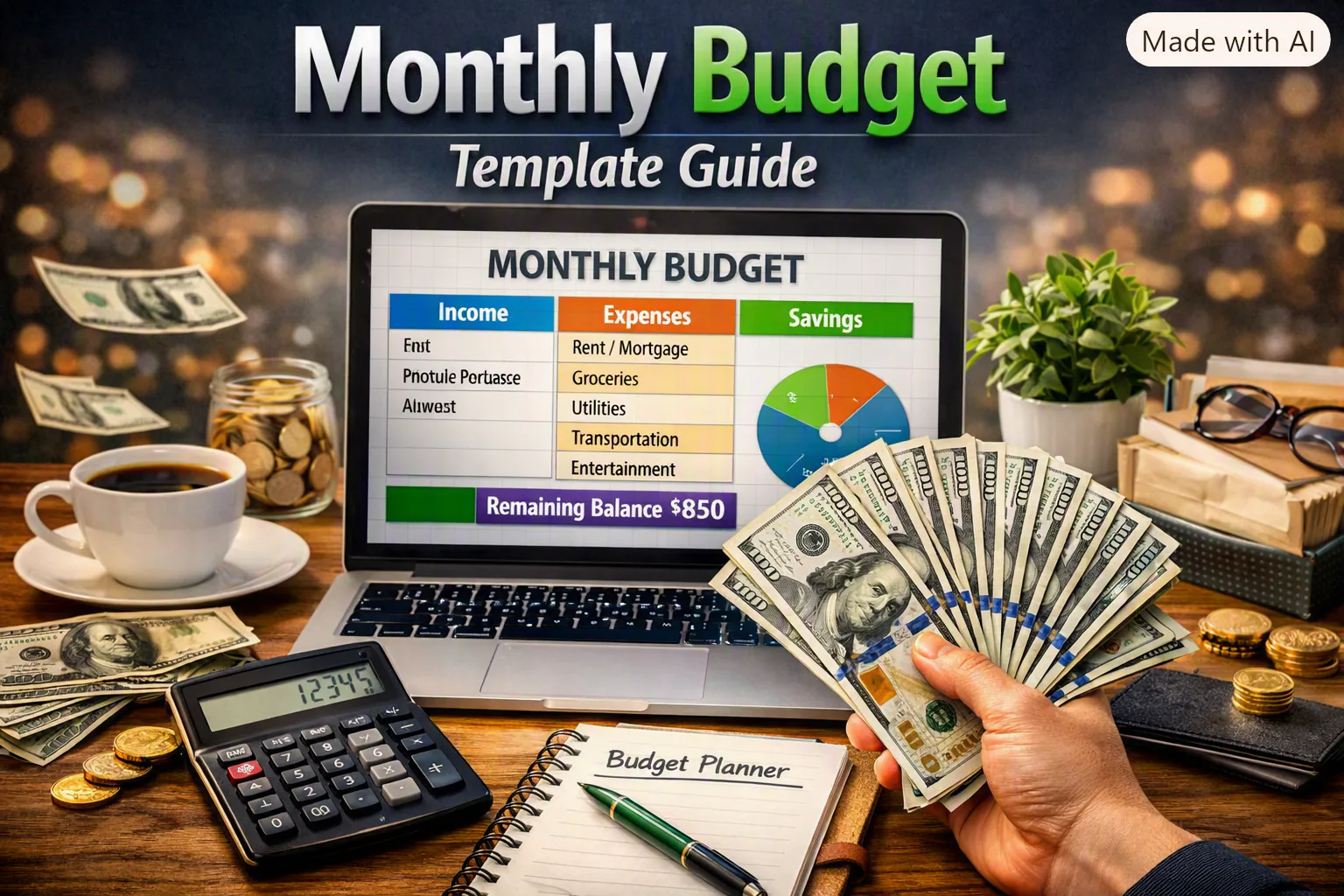
Managing money doesn’t have to feel overwhelming. A monthly budget template gives you a clear picture of where your money goes, helps you plan ahead, and reduces the stress that comes from guessing whether you can afford something. Whether you’re just starting out, rebuilding after debt, or trying to save more consistently, a practical monthly budget can become one of your most useful financial tools.

A monthly budget template is simply a structured way to track income and expenses over a single month. Instead of reacting to bills as they appear, you decide in advance how your money should work for you. This shift from reactive to intentional spending is what makes budgeting effective for so many people.

Why a Monthly Budget Template Matters Many people think budgeting is about restriction, but in reality, it’s about clarity. When you know how much you earn and where it’s going, you can make decisions with confidence. A monthly format works especially well because most bills, paychecks, and financial obligations follow a monthly cycle.

Using a template saves time and removes guesswork. You don’t need to reinvent the wheel every month. Once you set up a system that fits your lifestyle, you simply update the numbers and adjust as needed. Over time, patterns become obvious, making it easier to cut waste and prioritize what matters most.

What a Good Monthly Budget Template Includes A helpful monthly budget template usually starts with income. This includes your main salary, side hustles, freelance work, or any other regular money coming in. It’s best to base your budget on realistic, predictable income rather than occasional windfalls.

Next come fixed expenses. These are costs that stay roughly the same each month, such as rent or mortgage payments, utilities, insurance, phone plans, and subscriptions. Listing them clearly ensures that essentials are covered before money is spent elsewhere.

Variable expenses follow. These include groceries, transportation, dining out, personal care, and entertainment. These categories are flexible and often where budgeting has the biggest impact. Seeing these numbers written down makes it easier to spot overspending and make small adjustments that add up.

Savings and financial goals are another key part of a monthly budget template. This can include emergency savings, sinking funds for future expenses, retirement contributions, or paying down debt. Treating savings like a bill you pay yourself each month increases consistency. Please read on to learn more about guide on free budget template.

How to Choose the Right Monthly Budget Template There is no single template that works for everyone. The best one is the one you’ll actually use. Some people prefer a simple one-page layout, while others like detailed spreadsheets with formulas. The choice depends on your comfort level and financial situation.

If you’re a beginner, a basic template with broad categories is often enough. Too much detail early on can feel discouraging. As you gain confidence, you can add more categories or tracking features.

Digital templates are popular because they’re easy to update and calculate automatically. Tools like spreadsheets or budgeting apps can save time and reduce errors. Printable templates work well for people who enjoy writing things down and reviewing their finances manually.

Setting Up Your Monthly Budget Step by Step Start by gathering your financial information. Look at recent bank statements, pay stubs, and bills to understand your typical income and spending. This gives you a realistic starting point rather than relying on estimates.

Write down your total monthly income, then list your fixed expenses. Subtract these from your income to see how much remains for variable spending, savings, and goals. This step alone can be eye-opening.

Assign spending limits to each variable category based on your priorities. If eating out is important to you, allow room for it, but balance it with savings or other goals. A budget that reflects your real life is more sustainable than one that feels too strict.

Track your spending throughout the month. This doesn’t have to be complicated. A quick daily check-in or weekly update is often enough to stay on track. At the end of the month, review what worked and what didn’t, then adjust for the next month.

Common Budgeting Mistakes to Avoid One common mistake is being too optimistic. Underestimating expenses or overestimating income can lead to frustration. It’s better to be slightly conservative and leave room for surprises.

Another issue is forgetting irregular expenses. Things like annual subscriptions, car maintenance, or holiday spending can disrupt a monthly budget if they’re not planned for. Creating sinking funds within your template helps smooth these costs over time.

Many people also give up too quickly. Budgeting is a skill that improves with practice. The first few months may feel messy, but consistency is more important than perfection.

Monthly Budget Templates for Different Lifestyles For individuals living alone, a simple income-and-expense template may be enough. Couples often benefit from shared templates that show combined income and joint expenses while still allowing personal spending categories.

Families may need more detailed templates that include childcare, school costs, and groceries. Seeing these expenses clearly can help with long-term planning and savings goals.

Freelancers and self-employed workers often prefer flexible templates that account for fluctuating income. Using an average income and prioritizing savings during higher-earning months can make budgeting more stable.

Free Tools and Resources for Monthly Budgeting There are many free resources available to help you get started. Spreadsheet templates from Google Sheets or Excel allow customization and automatic calculations. Budgeting apps like Mint or YNAB-style zero-based budgeting tools can also help track spending in real time.

For educational guidance, the Consumer Financial Protection Bureau offers free budgeting worksheets and financial planning resources at their website. NerdWallet also provides budgeting tips and calculators that explain different budgeting methods in plain language at

Making Your Budget Work Long Term A monthly budget template is most effective when it evolves with your life. Changes in income, expenses, or goals should be reflected in your budget. Reviewing it monthly keeps it relevant and useful.

Automation can also help. Setting up automatic bill payments and savings transfers reduces the chance of missed payments and makes sticking to your plan easier. Over time, budgeting becomes less about tracking every dollar and more about guiding your financial decisions.

Celebrating progress matters too. If you stick to your budget or reach a savings milestone, acknowledge it. Positive reinforcement makes the habit easier to maintain.

FAQs About Monthly Budget Templates What is the best monthly budget template for beginners A simple template with income, fixed expenses, variable expenses, and savings is usually best. Starting small helps build confidence and consistency.

Should I budget based on net or gross income Most people find it easier to budget using net income, since that’s the money actually available to spend after taxes and deductions.

How often should I update my monthly budget A quick check once a week is usually enough. At the end of the month, review everything and make adjustments for the next month.

Can a monthly budget template help with debt repayment Yes. By clearly showing available income, a budget makes it easier to plan extra payments and avoid new debt.

Do I need budgeting software to use a template No. A simple spreadsheet or printable template works just as well. The best tool is the one you’ll use consistently.

Final Thoughts A monthly budget template is not about limiting your life. It’s about understanding your money so you can use it intentionally. By giving every dollar a purpose, you reduce financial stress and create space for savings, goals, and enjoyment. Whether you choose a digital spreadsheet, an app, or a printable worksheet, the habit of monthly budgeting can transform the way you manage money over time

#monthly budget template, budgeting, budget, budget template, money tips, finance, financial freedom

Enjoyed this?

Get the next one in your inbox, or take the next step on your career.

Book a discovery call
Keep reading

CZ
personal finance

CheckCard: Everything You Need to Know About Using One Wisely

A checkcard is one of the most common financial tools available to consumers today. Often confused with debit cards

4 min read
CZ
home finance

DIY Walk-In Closet on a Budget: How to Build an Organized Space

A DIY walk-in closet on a budget is completely possible with smart planning, affordable materials, and a little creativity. Instead of spending thousands on custom cabinetry, you can design and build a functional, stylish closet yourself for a fraction of the price. If you’ve ever opened your wardrobe and felt like your clothes were fighting for space, you’re not alone. Most of us dream about having a beautiful walk-in closet where everything is neat, visible, and easy to reach. The good news is you don’t need a luxury home or a huge renovation budget to make that happen. In this guide, I’ll walk you step-by-step through planning, budgeting, building, organizing, and decorating your own walk-in closet using practical, real-life strategies that keep costs low while results look high-end. By the end, you’ll see that transforming an empty room, spare corner, or underused space into your dream closet is more about smart decisions than big money. Why Build a DIY Walk-In Closet Instead of Buying Custom Custom closets look amazing, but they come with premium prices. Professional installations often cost anywhere from $2,000 to $10,000 or more depending on size and materials. For many households, that money could be better spent on savings, travel, or other home improvements. Doing it yourself allows you to control every cost. You choose the materials, layout, and style. You can upgrade slowly instead of paying everything upfront. Plus, you get something that fits your exact needs instead of a one-size-fits-all design. Many affordable options like IKEA shelving, plywood builds, thrifted dressers, and wall-mounted racks can look just as polished as designer closets. DIY also gives you flexibility. If your wardrobe grows or changes, you can easily adjust the setup without paying a contractor again. How Much Does a Budget Walk-In Closet Really Cost The total cost depends on size and materials, but you’d be surprised how affordable it can be. Here’s a realistic breakdown to help you plan. | Item | Budget Range | | Shelving units | $100–$400 | | Hanging rods | $30–$100 | | Drawer storage | $80–$300 | | Lighting | $30–$150 | | Paint/finishing | $50–$120 | | Decorative touches | $50–$200 | | Total estimated | $340–$1,270 | Even on the higher end, you’re still paying far less than custom installations. Many people complete theirs under $600 by mixing thrifted finds and DIY builds. 1: Choose the Right Space You don’t need a massive room to create a walk-in closet. Small spaces often work even better because they force you to stay organized. Look around your home for underused areas like a spare bedroom corner, a box room, an attic section, an unused guest room, a wide hallway nook, or even a section of your bedroom separated by curtains or partitions. Measure carefully. A functional closet can work in spaces as small as 4×5 feet if designed properly. Focus more on vertical space than floor space because walls provide most of your storage potential. 2: Plan Your Layout Like a Pro Before buying anything, sketch your layout. Planning saves money because you won’t buy items you don’t need. Think about how you use your clothes daily. Do you hang most items or fold them? Do you own many shoes or accessories? Your answers guide the design. Most closets include three core zones: hanging space for dresses and shirts, shelves or drawers for folded items, and a lower area for shoes or bins. Use the walls from floor to ceiling. Add double hanging rods to double your space instantly. Install higher shelves for seasonal storage. This approach maximizes every inch without increasing cost. 3: Pick Budget-Friendly Materials That Look Expensive You don’t need solid wood or luxury cabinets. Affordable materials can look just as good with the right finishing. Plywood is strong, cheap, and easy to paint. MDF boards work well for shelves. IKEA and similar stores sell modular systems that are simple to install. Metal rods and brackets are inexpensive and sturdy. Floating shelves give a modern look without heavy carpentry. Paint everything the same color for a clean, built-in appearance. White, beige, or soft gray instantly makes cheap materials look polished. 4: Build Your Closet System Start with the structure first. Install wall-mounted brackets and shelves securely using studs. Add hanging rods next. Then place drawer units or dressers. Finally, add small accessories like hooks, baskets, and dividers. Work in stages. You don’t need everything at once. Begin with basics and upgrade slowly. This keeps costs manageable and avoids overspending. 5: Add Smart Storage That Saves Money Long-Term Organization prevents clutter and reduces unnecessary shopping because you can actually see what you own. Use baskets for scarves and belts. Add shoe racks to keep floors clear. Install pegboards for bags or hats. Drawer dividers keep small items tidy. Clear bins help you spot items quickly. Label everything to maintain order. When your closet stays organized, you’re less likely to buy duplicates. That alone saves money over time. 6: Upgrade Lighting for a Luxury Feel Lighting makes a huge difference. Dark closets feel cramped, but bright spaces look bigger and more expensive. Use stick-on LED lights, battery puck lights, or affordable strip lighting. Warm white lighting feels cozy while cool white feels modern. Good lighting helps you dress faster and keeps the space inviting. 7: Make It Stylish Without Overspending You don’t need designer decor. Small touches create big impact. Add a full-length mirror from a discount store. Use matching hangers for a uniform look. Place a small rug for comfort. Paint an accent wall or add removable wallpaper. Hang framed prints or quotes. Add a small bench or stool if space allows. These details turn a simple storage room into a personal boutique. Example DIY Closet Setup Under $500 The use of a simple budget planning by homeowners goes a long way to help in reducing the cost of your budget. You can read more about the guide to budget planning in one of our articles. Here’s a sample budget plan many homeowners use successfully. | Item | Cost | | 3 shelving units | $180 | | Closet rods + brackets | $60 | | Thrifted dresser | $75 | | LED lights | $40 | | Paint | $60 | | Baskets & bins | $55 | | Total | $470 | This setup looks clean, functional, and stylish without breaking the bank. Common Mistakes to Avoid Many people overspend because they rush. Don’t buy fancy organizers before planning. Avoid deep shelves that waste space. Don’t forget lighting. Don’t ignore vertical storage. And don’t overfill the closet. Editing your wardrobe is just as important as building the space. Budget-Friendly Closet Ideas Use curtains instead of doors. Repurpose bookshelves. Convert an old desk into a vanity. Install wall hooks instead of bulky racks. Use tension rods for temporary hanging space. Shop thrift stores for dressers and mirrors. These ideas keep costs low while maintaining function. Long-Term Savings Benefits A well-organized closet saves time, reduces stress, and cuts spending. You buy fewer clothes because you see what you already own. Take better care of items, so they last longer. You avoid replacing lost accessories. Over time, these small savings add up significantly. Helpful Resources and References For more ideas and step-by-step inspiration, you can explore trusted home improvement resources: You can visit IKEA closet planning tools and Budget home organization tips. Frequently Asked Questions How much space do I need for a walk-in closet? Even a 4×5 foot area can work with smart vertical storage and shelves. Can I build one without tools? Basic tools like a drill, level, and screwdriver are enough. Many systems require minimal assembly. What’s the cheapest option for shelving? Plywood boards with simple brackets or second-hand bookcases are often the most affordable. Is a DIY closet durable? Yes. If installed properly into wall studs, shelves and rods can last for years. How can I make it look high-end on a budget? Use matching hangers, paint everything one color, add good lighting, and keep it clutter-free. Final Thoughts A DIY walk-in closet on a budget proves that you don’t need thousands of dollars to create a space that feels organized, stylish, and enjoyable. With careful planning, affordable materials, and a little creativity, you can transform even the smallest area into a personal dressing space that looks custom-made. Start small, build gradually, and focus on function first. Over time, you’ll have a closet that not only saves money but also makes your daily routine easier and more satisfying.

4 min read
CZ
home finance

Unfinished Basement Ideas on a Budget: Transforming Your Space.

Planning an unfinished basement on budget is often an overlooked area in the home. But with a thoughtful approach, it can be transformed into a functional

4 min read