

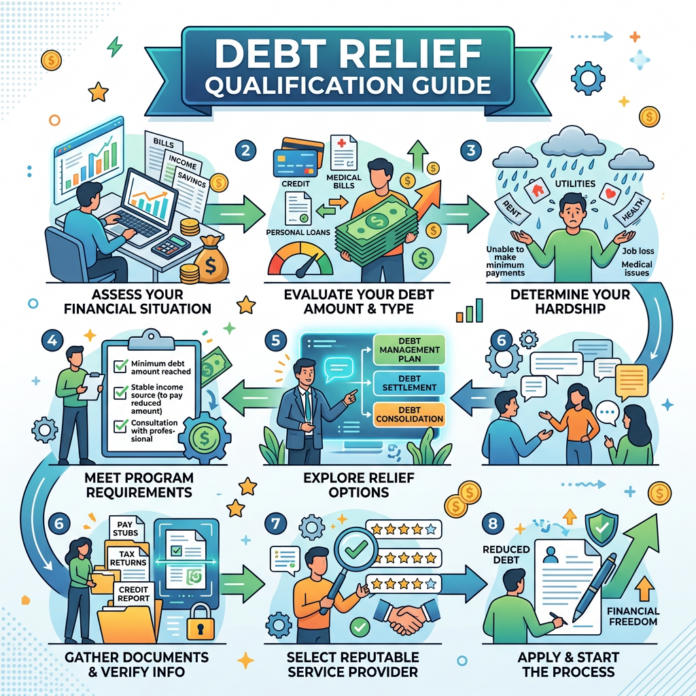


There is need for one to restructure his debt through debt relief. Debt is something millions of people struggle with daily, and if you’re reading this, you’re probably looking for a way out. The truth is, managing debt can feel overwhelming, especially when interest rates keep increasing and minimum payments barely reduce your balance. But the good news is that there are legitimate ways to reduce or restructure your debt—and one of the most effective options is debt relief programs.
Before you jump into any solution, it’s important to understand whether you actually qualify. Many people assume debt relief is only for extreme cases, but that’s not always true. In fact, many everyday individuals with credit card debt, personal loans, or financial stress may already qualify without realizing it. Please read more about debt relief initiatives and how to find legitimate help.
Debt relief programs are designed to help people lower their total debt, reduce interest rates, or create more manageable monthly payments. These programs often work by negotiating with creditors or consolidating debts into a single payment. However, eligibility depends on several factors including your total debt amount, income, and financial situation.
One of the most common questions people ask is: “How much debt do I need to qualify?” While requirements vary, many programs typically look for individuals with at least $5,000 in unsecured debt such as credit cards or medical bills. If you fall within this range, you may already be a good candidate.
Another important factor is your ability to make monthly payments. Debt relief isn’t about avoiding payments altogether—it’s about restructuring them into something more manageable. If you have a steady income but struggle to keep up with high-interest debt, that’s often a strong sign you could benefit from these programs.
Your credit score may also play a role, but not always in the way you think. Unlike traditional loans, some debt relief options are actually designed for people with poor or declining credit. This makes them more accessible to those who need help the most.
Aside from financial factors, your level of financial stress is also important. If you’re constantly worried about bills, receiving collection calls, or using one credit card to pay another, it may be time to explore your options. Ignoring debt rarely makes it go away—in fact, it usually gets worse over time.
It’s also worth noting that not all debt relief options are the same. Some focus on consolidation, others on settlement, and some on credit counseling. Each approach has its pros and cons, and the best option depends on your personal situation.
Before you jump into any solution, it’s important to understand whether you actually qualify. Many people assume debt relief is only for extreme cases, but that’s not always true. In fact, many everyday individuals with credit card debt, personal loans, or financial stress may already qualify without realizing it. Debt relief programs are designed to help people regain control of their finances and reduce the emotional burden that comes with financial pressure.
This is why taking a quick qualification check can be so helpful. Instead of guessing, you can get a clearer idea of what options are available to you based on your specific financial details.
Below is a simple quiz designed to help you understand whether you may qualify for debt relief programs. It only takes a few seconds and can give you valuable insight into your financial options.
Take the quiz below to check your eligibility.
Do You Qualify for Debt Relief?
Answer this quick question to find out:
Debt relief programs are financial solutions created to help consumers lower their debt burden, reduce interest rates, negotiate balances, or consolidate multiple payments into one manageable monthly payment. These programs are often recommended for people struggling with unsecured debt such as:
- Credit card debt
- Medical bills
- Personal loans
- Store cards
- Payday loans
The main purpose of debt relief is not to eliminate responsibility but to create a realistic path toward repayment and financial recovery.
One of the biggest reasons people fall deeper into debt is because of high-interest rates. Many credit cards charge interest rates that make it difficult to reduce the principal balance. Even when people make monthly payments consistently, most of the payment may go toward interest instead of reducing the actual debt. This creates a cycle that can last for years.
Debt relief programs attempt to solve this problem by restructuring payments or negotiating better terms with creditors. Some programs focus on reducing monthly payments, while others focus on lowering total balances or interest rates.
According to financial experts, debt consolidation and debt settlement are among the most common forms of debt relief available today
Understanding the Different Types of Debt Relief Programs
Not all debt relief programs are the same. Understanding the differences can help you choose the best option for your situation.
Debt Consolidation
Debt consolidation combines multiple debts into one payment. Instead of managing several bills with different due dates and interest rates, you make one monthly payment.
This can be done through:
- Personal loans
- Balance transfer credit cards
- Consolidation programs
The biggest benefit is simplicity and potentially lower interest rates.
For example, someone with five different credit card balances may combine them into one loan with a lower interest rate. This can reduce financial stress and make budgeting easier.
Debt Settlement
Debt settlement involves negotiating with creditors to reduce the total amount owed. In some cases, creditors may accept less than the full balance if they believe it increases the likelihood of repayment.
Debt settlement programs are often used by people facing serious financial hardship.
However, debt settlement may affect your credit score temporarily, so it’s important to understand both the advantages and disadvantages
Credit Counseling
Credit counseling agencies help consumers develop repayment plans and improve financial management skills.
Counselors may:
- Create budgets
- Negotiate lower interest rates
- Offer debt management plans
- Provide financial education
Credit counseling is often a good starting point for people who are overwhelmed but still able to make monthly payments.
Debt Management Plans
A debt management plan (DMP) allows consumers to make one payment to a counseling agency, which then distributes payments to creditors.
This can help:
- Reduce late fees
- Lower interest rates
- Simplify repayment
Many consumers find this option less stressful because it creates a clear repayment structure.
Who Qualifies for Debt Relief?
One of the most common questions people ask is: “How much debt do I need to qualify?”
While requirements vary, many debt relief companies typically look for individuals with at least $5,000 in unsecured debt such as credit cards or medical bills. If you fall within this range, you may already be a good candidate.
However, debt amount is only one factor.
Other important factors include:
- Monthly income
- Ability to make payments
- Financial hardship
- Credit score
- Existing debts
Some programs are specifically designed for individuals with poor or declining credit scores. This makes debt relief accessible to people who may not qualify for traditional loans.
Signs You May Need Debt Relief
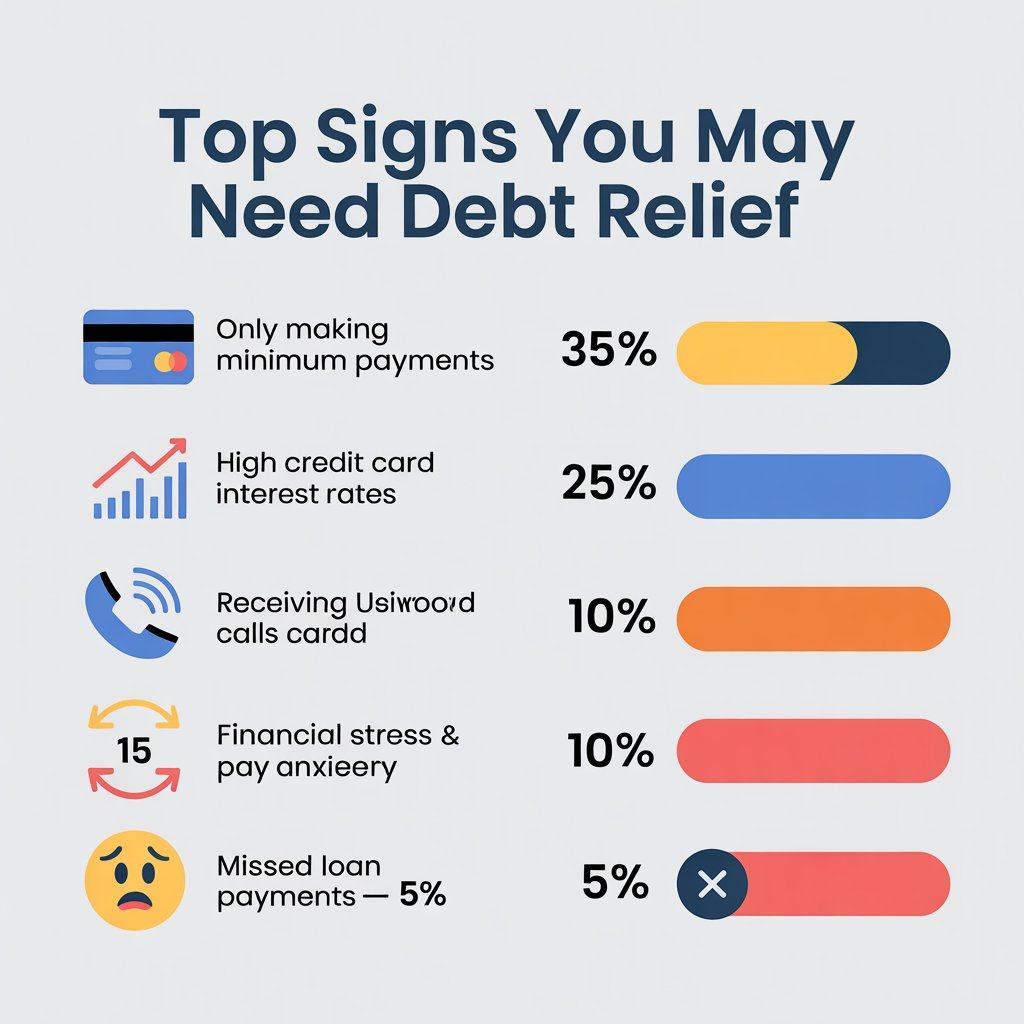
Many people wait too long before seeking help. Unfortunately, ignoring debt rarely makes it disappear. In many cases, the situation becomes worse over time because of accumulating interest and fees.
TOP SIGNS YOU MAY NEED DEBT RELIEF
Only Making Minimum Payments — 35%
High Credit Card Interest Rates — 25%
Receiving Collection Calls — 15%
Using One Card to Pay Another — 10%
Financial Stress & Anxiety — 10%
Missed Loan Payments — 5%
Quick Facts
Most programs require at least $5,000+ unsecured debt
Debt relief may help reduce monthly payments and interest rates
Common debts include:
- Credit cards
- Medical bills
- Personal loans
- Payday loans
Common Debt Relief Options
Debt Consolidation
Debt Settlement
Credit Counseling
Debt Management Plans
You may benefit from debt relief if:
- You only make minimum payments
- You use one credit card to pay another
- Collection calls are increasing
- You feel anxious about bills
- Your balances continue growing
- You have missed payments
- Interest charges keep increasing
Financial stress can also affect mental health, relationships, and productivity. Seeking help early may prevent larger financial problems later.
The Psychological Impact of Debt
Debt is not only a financial issue—it is also emotional.
People struggling with debt often experience:
- Anxiety
- Stress
- Sleep problems
- Depression
- Reduced confidence
Financial pressure can create constant worry about the future. Many people feel trapped because they do not know where to begin.
Debt relief programs can provide emotional relief by creating structure and offering hope for recovery.
How Debt Relief Programs Negotiate with Creditors
Many consumers wonder how debt relief companies actually work.
In debt settlement programs, companies may negotiate directly with creditors to reduce balances or adjust payment terms.
Creditors may agree because:
- Partial repayment is better than no repayment
- They want to avoid lengthy collection processes
- Consumers demonstrate financial hardship
Each case is different, and results depend on individual financial circumstances.
The Pros of Debt Relief Programs
Debt relief programs can offer several benefits:
Lower Monthly Payments
Reducing payment amounts can improve monthly cash flow.
Reduced Interest Rates
Some programs negotiate lower interest rates, helping consumers pay debt faster.
Simpler Finances
Combining multiple payments into one can reduce stress and confusion.
Faster Debt Repayment
Structured plans may shorten repayment timelines.
Reduced Collection Calls
Creditors may stop aggressive collection activity after agreements are reached.
The Cons of Debt Relief Programs
Debt relief also has potential disadvantages.
Credit Score Impact
Some options may temporarily lower credit scores.
Fees
Certain debt relief companies charge service fees.
Scams
Not all companies are legitimate. Consumers should research carefully before enrolling.
Not Guaranteed
Creditors are not always required to accept settlement offers.
This is why understanding program details is essential before making decisions
How to Find Legitimate Debt Relief Help
Unfortunately, scams exist within the debt relief industry. Some companies make unrealistic promises or charge large upfront fees.
To protect yourself:
- Research company reviews
- Verify licenses
- Avoid guaranteed promises
- Read contracts carefully
- Check consumer protection agencies
Legitimate programs usually explain risks clearly and avoid pressuring consumers into quick decisions.
Debt Relief vs Bankruptcy
Many people compare debt relief with bankruptcy.
Debt relief aims to restructure repayment and reduce debt burden without legal bankruptcy proceedings.
Bankruptcy is a legal process that may eliminate certain debts but can significantly affect credit and financial opportunities for years.
Debt relief is often considered before bankruptcy because it may allow consumers to repay debt while avoiding severe legal consequences.
The Role of Budgeting During Debt Relief
Debt relief alone is not enough without proper budgeting.
Successful financial recovery often requires:
- Spending discipline
- Budget tracking
- Emergency savings
- Reduced unnecessary expenses
Budgeting helps prevent future debt accumulation.
Creating a Simple Debt Recovery Plan
A debt recovery plan may include:
- Listing all debts
- Reviewing interest rates
- Prioritizing high-interest balances
- Setting monthly budgets
- Choosing a debt relief strategy
- Tracking progress regularly
Small improvements over time can create significant financial change.
Debt Relief and Credit Scores
Your credit score may improve over time if debt becomes more manageable and payments become consistent.
Factors affecting credit include:
- Payment history
- Credit utilization
- Length of credit history
- Account balances
Reducing debt responsibly may eventually improve overall credit health.
Technology and Digital Debt Relief Services
Modern debt relief companies increasingly use digital platforms and AI-powered tools to:
- Analyze debt
- Recommend strategies
- Track repayment
- Improve financial education
Online financial tools make it easier for consumers to compare options and monitor progress.
Common Mistakes People Make During Debt Relief
Ignoring the Root Cause
Without spending changes, debt may return.
Taking on New Debt
Adding more debt during repayment creates additional problems.
Missing Payments
Consistency is important for successful repayment.
Falling for Scams
Consumers should research thoroughly before enrolling in programs.
Why Acting Early Matters
The earlier someone addresses debt problems, the easier it may be to recover financially.
Waiting too long can result in:
- Larger balances
- More interest charges
- Collection lawsuits
- Damaged credit
Even small steps toward repayment can make a major difference over time.
Frequently Asked Questions (FAQ)
What is a debt relief program?
A debt relief program helps consumers reduce, restructure, or manage debt through consolidation, settlement, or repayment plans.
How much debt do I need to qualify?
Many programs look for at least $5,000 in unsecured debt, although requirements vary.
Will debt relief hurt my credit score?
Some programs may temporarily affect credit scores, especially settlement programs.
Can debt relief stop collection calls?
In some cases, creditors may reduce collection activity after agreements are established.
Is debt consolidation the same as debt settlement?
No. Consolidation combines debts into one payment, while settlement negotiates reduced balances.
Are debt relief companies legitimate?
Some are legitimate, but consumers should research carefully to avoid scams.
How long does debt relief take?
Programs may last several months to several years depending on debt amount and repayment structure.
Is debt relief better than bankruptcy?
It depends on the situation. Many people explore debt relief before considering bankruptcy.
Conclusion
Debt can feel overwhelming, especially when interest rates rise, balances grow, and financial stress affects daily life. Millions of people struggle with debt every year, but the important thing to remember is that financial recovery is possible. Debt relief programs exist to help individuals restructure payments, reduce financial pressure, and regain control of their finances.
The first step toward solving debt problems is understanding your options. Whether through debt consolidation, settlement, credit counseling, or debt management plans, there are multiple ways to reduce financial strain and create a more manageable repayment structure.
However, debt relief is not a magic solution. Long-term financial improvement also requires budgeting, discipline, and responsible financial habits. The goal is not only to reduce debt today but also to build a stronger financial future tomorrow.
If you constantly worry about bills, struggle with minimum payments, or feel trapped by growing balances, exploring debt relief options may be one of the smartest financial decisions you can make. Acting early can help prevent larger problems later and may significantly improve both your financial and emotional well-being.
Most importantly, remember that seeking financial help is not a sign of failure. Many hardworking people face financial difficulties due to rising living costs, emergencies, or unexpected life changes. What matters most is taking action and finding a realistic path toward financial stability and peace of mind.
Read Other Related Articles
Discover more from windetop
Subscribe to get the latest posts sent to your email.