




If you’re struggling with debt, you’re not alone. Millions of people face the same challenge every day, trying to balance bills, expenses, and financial responsibilities. It can feel like you’re stuck in a cycle that’s impossible to escape—but the reality is, there are solutions available.
The first step to solving any financial problem is understanding it. Debt doesn’t usually happen overnight. It builds gradually through spending habits, unexpected expenses, or life changes. Over time, interest accumulates, and what once seemed manageable becomes overwhelming.
One of the biggest mistakes people make is waiting too long to seek help. The longer you wait, the more difficult it becomes to regain control. Interest continues to grow, late fees add up, and your financial stress increases.
Fortunately, there are structured programs designed to help people reduce and manage their debt more effectively. These solutions are not “quick fixes,” but they can provide a clear path toward financial stability.
Debt relief programs often work by negotiating with creditors to lower your total balance or reduce interest rates. In some cases, they may combine multiple debts into a single monthly payment, making it easier to manage your finances. Please read on to see how you can consider working with credit councelling to help you manage your money and how to get out of debt
Another key benefit is the potential to reduce stress. Financial pressure can affect every area of your life, from your mental health to your relationships. Taking action can help you regain a sense of control and confidence.
Many people hesitate because they’re unsure if they qualify or worry about the impact on their credit. While it’s true that some options may affect your credit score, continuing to struggle with high debt often has a greater long-term impact.
The important thing is to explore your options and make an informed decision. You don’t have to commit immediately—you can simply check your eligibility and see what solutions are available.
Taking that first step can make a significant difference. Instead of guessing or hoping things improve on their own, you can get real answers based on your situation.
Below is a simple way to check if you qualify for debt relief options. It only takes a few seconds and could help you find a better path forward.
💳 Struggling With Debt?
Check if you qualify for debt relief options today.
Fortunately, there are structured programs designed to help people reduce and manage their debt more effectively. These solutions are not “quick fixes,” but they can provide a clear path toward financial stability.
Debt relief programs often work by negotiating with creditors to lower your total balance or reduce interest rates. In some cases, they may combine multiple debts into a single monthly payment, making it easier to manage your finances. Debt relief refers to several options that help reorganize and reduce debt burdens
Please read on to see how you can consider working with credit counseling to help you manage your money and how to get out of debt.
Understanding Why Debt Becomes Overwhelming
Debt can affect anyone. Even financially responsible people sometimes face situations beyond their control.
Common causes of debt include:
- Medical emergencies
- Job loss
- Divorce or family issues
- Inflation and rising living costs
- Overspending
- Business losses
- High-interest loans
- Credit card dependence
What makes debt especially dangerous is compound interest. Interest charges continue building over time, which means balances grow even if you are making small monthly payments.
Many people eventually reach a point where:
- Minimum payments barely reduce balances
- Bills become difficult to manage
- Credit cards are used for necessities
- Collection calls increase
- Financial anxiety becomes constant
This is often when debt relief or credit counseling becomes important.
What Is Debt Relief?
Debt relief is a broad term used to describe programs and strategies that help consumers reduce or restructure their debt
The goal is to make repayment more manageable and reduce financial stress.
Debt relief options may include:
- Debt consolidation
- Debt settlement
- Credit counseling
- Debt management plans
- Refinancing
Each option works differently depending on the person’s financial situation.
What Is Credit Counseling?
Credit counseling is a financial service that helps people understand their debt and create realistic repayment strategies
Counselors often help consumers:
- Build budgets
- Reduce spending
- Understand credit
- Create repayment plans
- Improve financial habits
Many nonprofit organizations provide credit counseling services to help consumers avoid deeper financial problems.
Unlike some debt settlement programs, credit counseling focuses heavily on financial education and long-term money management.
How Debt Relief Programs Work
Debt relief programs usually begin with a financial evaluation. This helps determine:
- Total debt amount
- Income level
- Monthly expenses
- Types of debt
- Ability to repay
Depending on the situation, a company or counselor may recommend:
- Lower interest rates
- One monthly payment
- Negotiated settlements
- Structured repayment plans
Some programs negotiate directly with creditors to reduce balances or stop collection activity.
According to financial experts, debt relief methods differ in costs, timelines, and credit score impact
Debt Consolidation Explained
Debt consolidation combines several debts into one payment.
For example, instead of paying:
- Three credit cards
- A medical bill
- A personal loan
you may combine them into one loan or payment plan.
Benefits include:
- Simpler payments
- Lower interest rates
- Easier budgeting
- Reduced stress
Many people find consolidation easier to manage because there is only one due date and one payment amount.
Debt Settlement Explained
Debt settlement involves negotiating with creditors to reduce the total amount owed.
In some situations, creditors may accept partial repayment if they believe full repayment is unlikely.
This option is often considered by people experiencing serious financial hardship.
However, debt settlement can affect credit scores, so it’s important to fully understand the risks and benefits before enrolling in a program.
The Emotional Impact of Debt
Debt is not just financial—it’s emotional too.
Financial pressure can affect:
- Sleep
- Mental health
- Relationships
- Confidence
- Productivity
Many people feel embarrassed or ashamed about debt, but financial difficulties are more common than most people realize.
Taking action can help you regain a sense of control and confidence.
Another key benefit of debt relief is the potential to reduce stress. Financial pressure can affect every area of your life, from your mental health to your relationships. Taking action can help you regain a sense of control and confidence.
Signs You May Need Debt Help
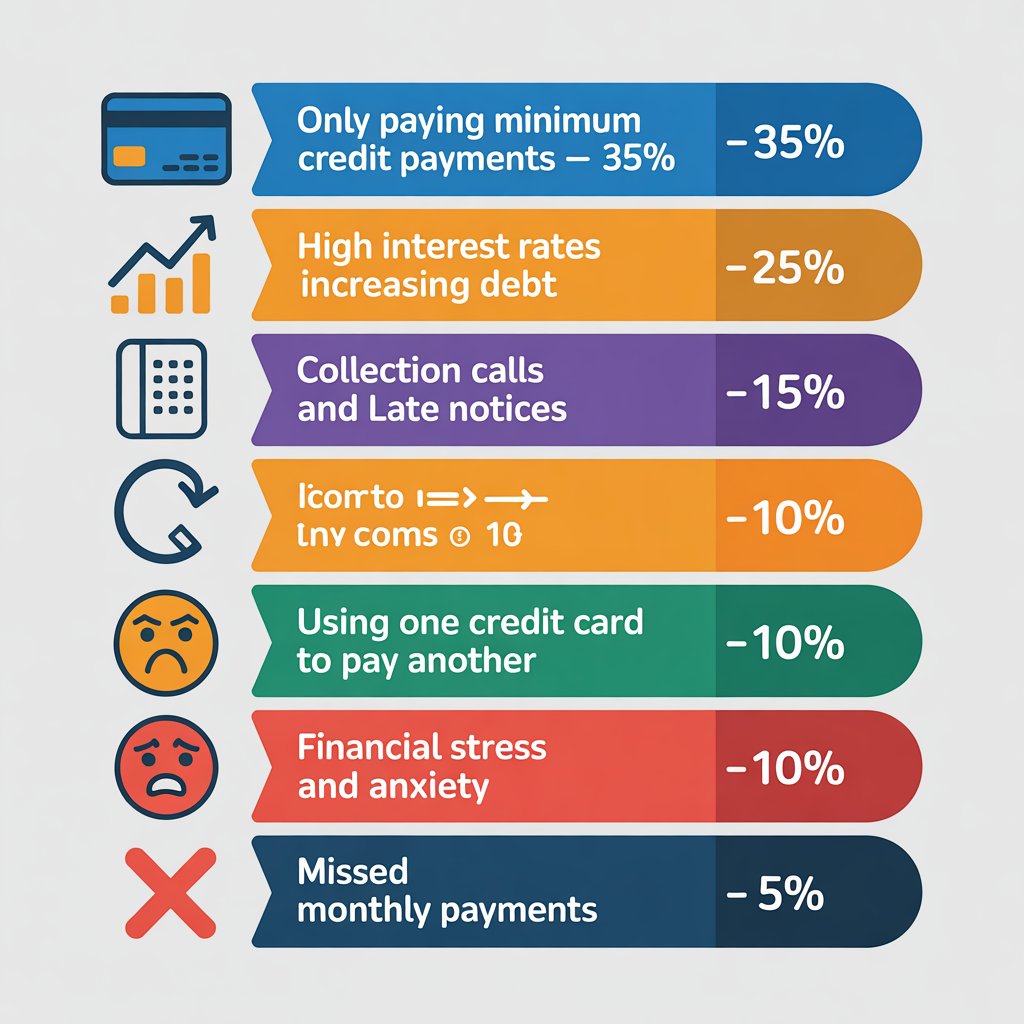
Common Financial Stress Indicators
Only Paying Minimum Credit Card Payments — 35%
High Interest Rates Increasing Debt — 25%
Collection Calls and Late Notices — 15%
Using One Credit Card to Pay Another — 10%
Financial Stress and Anxiety — 10%
Missed Monthly Payments — 5%
Possible Debt Relief Solutions
- Debt Consolidation
- Credit Counseling
- Debt Management Plans
- Debt Settlement
Quick Fact
Many debt relief programs help people with $5,000+ in unsecured debt such as credit cards, medical bills, and personal loans.
You may benefit from debt relief or counseling if:
- You only make minimum payments
- Your balances keep growing
- You use one card to pay another
- You receive collection calls
- You struggle paying monthly bills
- Your debt causes stress or anxiety
- You’ve missed payments
Ignoring these signs can make financial recovery more difficult later.
Why People Delay Getting Help
Many people hesitate because they’re unsure if they qualify or worry about the impact on their credit.
Others delay because:
- They feel embarrassed
- They hope things improve naturally
- They fear scams
- They don’t understand available options
While it’s true that some options may affect your credit score, continuing to struggle with high debt often has a greater long-term impact.
The important thing is to explore your options and make an informed decision.
Debt Relief and Credit Scores
A common concern is whether debt relief hurts credit scores.
The answer depends on the program.
Some options may temporarily lower your score, especially debt settlement programs. However, reducing overwhelming debt may improve long-term financial health and make future recovery easier.
Credit counseling and debt management plans may have less severe effects than missed payments, defaults, or bankruptcy.
Benefits of Credit Counseling
Credit counseling offers several advantages:
- Professional financial guidance
- Budget planning
- Lower stress
- Educational resources
- Better financial habits
- Structured repayment support
Many counseling agencies also provide free financial education services
Pros and Cons of Debt Relief
Pros
- Lower monthly payments
- Reduced interest rates
- Easier financial management
- Reduced collection pressure
- Structured repayment plans
Cons
- Potential credit score impact
- Program fees
- Long repayment timelines
- Risk of scams
Experts recommend carefully comparing debt relief methods before making decisions
How to Avoid Debt Relief Scams
Unfortunately, not all companies are trustworthy.
To protect yourself:
- Research company reviews
- Verify accreditation
- Avoid unrealistic promises
- Read contracts carefully
- Never rush decisions
Legitimate organizations usually explain risks clearly and provide transparent information.
Creating a Debt Recovery Plan
Getting out of debt usually requires:
- Understanding your finances
- Creating a budget
- Reducing unnecessary expenses
- Choosing a repayment strategy
- Staying consistent
Small improvements over time can create major long-term financial changes.
Tips for Managing Debt Better
Build a Budget
Track your income and expenses carefully.
Reduce Unnecessary Spending
Cut expenses where possible to free up money for repayment.
Focus on High-Interest Debt
Paying down high-interest balances first may save money over time.
Avoid Taking on New Debt
Limit unnecessary borrowing while repaying existing balances.
Build Emergency Savings
Even small savings can prevent future financial setbacks.
The Importance of Financial Education
Many people were never taught how to manage money properly. Credit counseling can help consumers understand:
- Interest rates
- Budgeting
- Credit scores
- Debt management
- Financial planning
Better financial education often leads to better long-term financial decisions.
Technology and Modern Debt Solutions
Modern financial technology has made debt management easier than ever.
Today, consumers can:
- Track spending through apps
- Monitor credit scores online
- Use budgeting tools
- Compare repayment options digitally
Technology allows people to better understand and manage their finances in real time.
Why Taking the First Step Matters
The hardest part for many people is simply starting.
Taking that first step can make a significant difference. Instead of guessing or hoping things improve on their own, you can get real answers based on your situation.
You don’t have to commit immediately—you can simply check your eligibility and see what solutions are available.
Below is a simple way to check if you qualify for debt relief options. It only takes a few seconds and could help you find a better path forward.
Conclusion
Debt can feel exhausting, stressful, and overwhelming, especially when balances continue growing and financial pressure affects your daily life. However, the important thing to remember is that financial recovery is possible. Millions of people successfully overcome debt every year through better planning, professional guidance, and structured repayment strategies.
Debt relief and credit counseling programs exist to help people regain control of their finances. Whether through consolidation, settlement, budgeting assistance, or financial education, these services can provide a realistic path toward stability and peace of mind.
The key is taking action early instead of waiting for the problem to grow worse. Interest charges, late fees, and financial stress often increase over time, making debt harder to manage later. Exploring your options now can help you reduce stress, improve financial habits, and create a more manageable future.
Most importantly, remember that asking for help is not a sign of failure. Financial difficulties happen to many hardworking people due to unexpected events, economic changes, or rising living costs. What matters most is making informed decisions and taking positive steps toward financial freedom.
Read Through Other Related Articles
Discover more from windetop
Subscribe to get the latest posts sent to your email.